
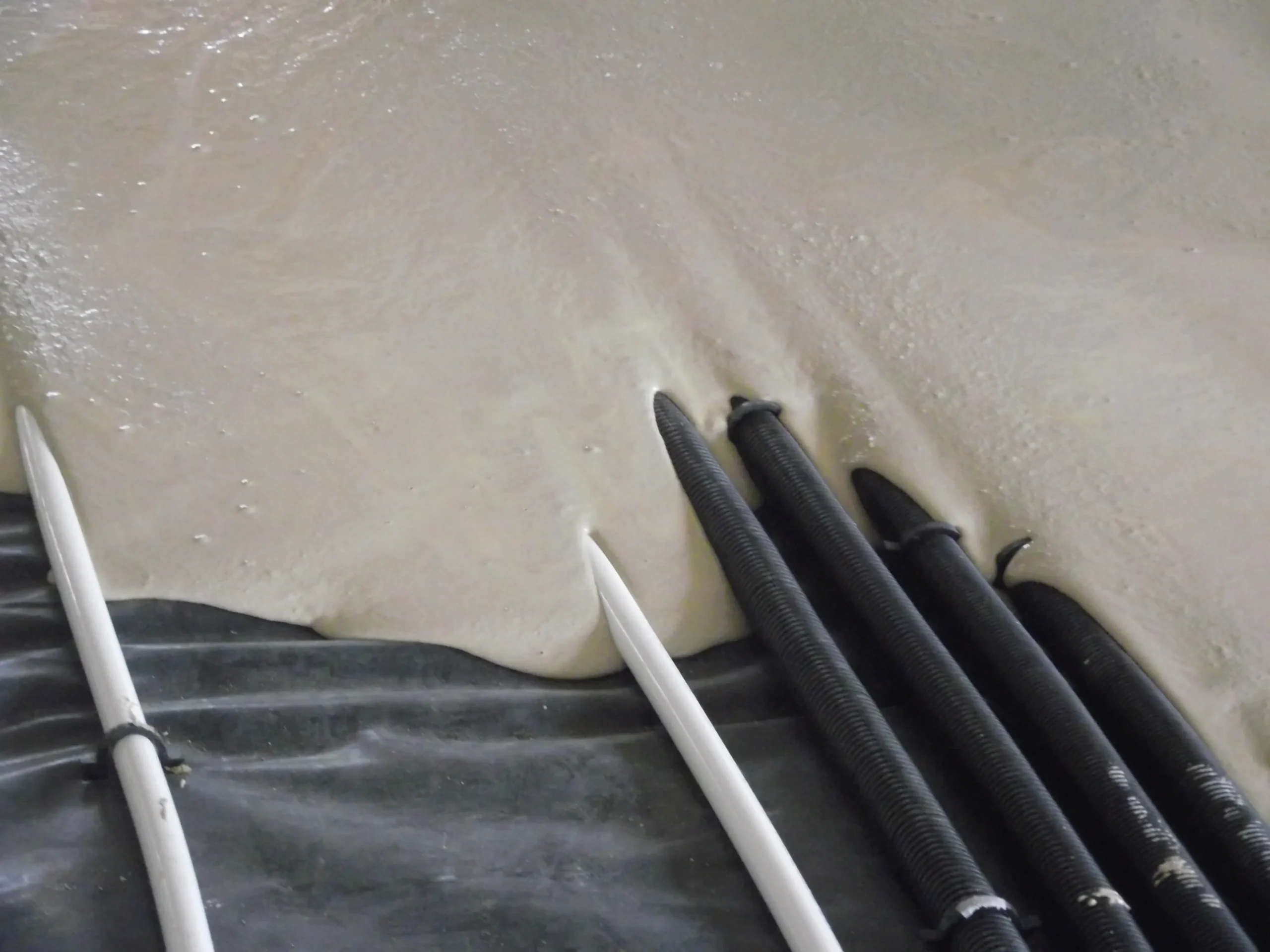
Choosing the correct floor screed thickness is essential for a durable, level finish. The required depth depends on the floor construction, underfloor heating (UFH), expected loading, and the screed product used.
Screedflo supplies several liquid screeds, each designed for different applications. Here are the typical installation depths and the UK guidance to consider.
What Is the Minimum Thickness for Floor Screed?
There is no single minimum thickness for every screed installation. Bonded screeds adhere directly to the concrete base, while unbonded screeds sit on a separating membrane. Floating screeds are laid over insulation, often alongside underfloor heating.
These differences affect the thickness required for adequate performance.
What Do UK Screed Standards Say?
BS 8204-7 provides guidance on pumpable self-smoothing screeds, including anhydrite liquid screeds.
For calcium sulphate-based screeds, the standard gives the following general minimum thicknesses:
- Bonded screeds: 25mm.
- Unbonded screeds: 30mm.
- Floating screeds: 35mm for domestic use and 40mm for commercial use.
These figures must be considered alongside the manufacturer’s product specifications. Screedflo’s different liquid screeds have their own minimum installation depths, depending on the substrate, underfloor heating system, and intended application.
The correct thickness should always be confirmed for the specific product and floor construction before installation. Screedflo’s specified minimum depths can differ according to the product and floor construction.
The design must also consider the substrate’s level, the required finished floor height, and the intended use of the space. Relevant project specifications and manufacturer instructions should always be checked before installation.
Screed Thickness by Product
Screedflo’s typical minimum installation depths vary by product and application.
| Screedflo product | Typical minimum thickness |
| Classic Liquid Screed | 30mm on concrete or a polythene membrane; 40mm on insulation; 45mm with UFH |
| Fast Drying Screed | 30mm on concrete or a polythene membrane; 40mm on insulation. |
| UFH Thermal Screed | 40mm on insulation, with 20mm minimum cover over UFH pipes |
| Extra Strength Liquid Screed | 30mm on concrete or a polythene membrane; 35mm on insulation; 45mm with UFH |
| Timber Liquid Screed | 40mm on a timber deck; 45mm with UFH |
| Thin Liquid Screed | From 15mm on concrete or a polythene membrane |
These figures are product-specific starting points, not universal design recommendations. The final specification must account for the substrate, insulation, pipework, loading and manufacturer’s guidance.
How Does Underfloor Heating Affect Screed Thickness?
Underfloor heating requires sufficient screed coverage to protect the pipes and support effective heat transfer. However, adding unnecessary thickness can increase the volume of material required and extend drying times.
Screedflo’s UFH Thermal Screed can be installed with a minimum 20mm cover over the heating pipes. Its Classic and Extra Strength products have different specified installation depths, so the appropriate option should be selected for the system and floor build-up.
Why Does the Correct Thickness Matter?
Too little screed can compromise performance, while excessive thickness can increase material costs and drying times. The correct depth helps deliver a durable floor that meets the project’s requirements.
Before installation, confirm the screed type, substrate preparation, insulation, and heating system details. Screedflo can help determine the appropriate product and thickness for your project.
Need advice on your floor screed specification? Contact Screedflo to discuss your project and arrange a quotation.