
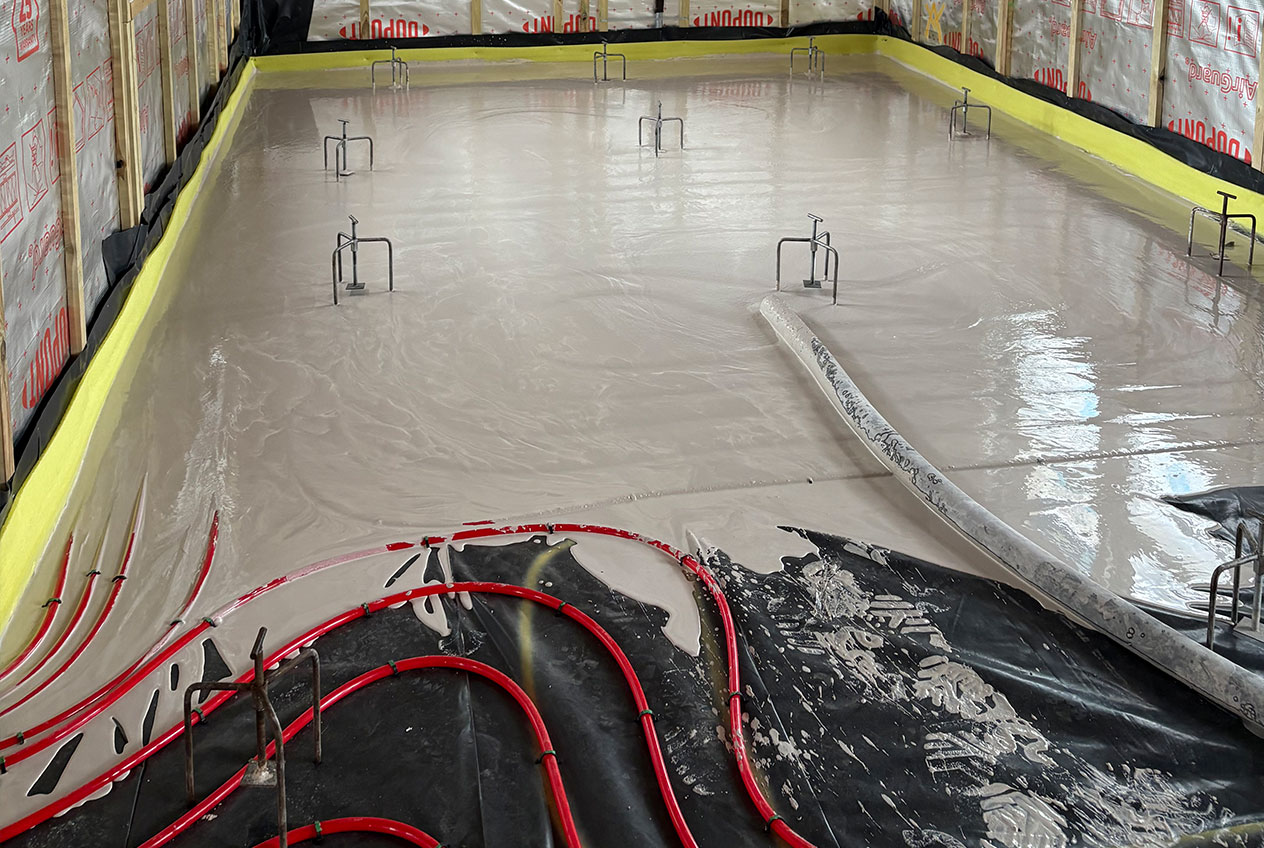
If you are installing wet underfloor heating, you will usually need screed over the heating pipes. The screed forms an important part of the floor build-up, surrounding the pipework, helping protect the system and creating a stable, level surface ready for the final floor finish.
Liquid screed is particularly suited to underfloor heating because it flows around the pipes, helping to create consistent coverage and effective heat transfer throughout the floor.
Why Is Screed Used Over Underfloor Heating?
Wet underfloor heating works by circulating warm water through pipes installed within the floor. Once installed, these pipes are covered with screed to create a solid, continuous layer above the heating system.
A correctly specified screed helps to:
- Provide even coverage around the heating pipes
- Protect the pipework within the floor construction
- Support efficient heat distribution across the room
- Create a smooth and level surface for floor finishes
For residential developments and larger projects, liquid screed also offers practical installation benefits. Its flowing properties allow it to be installed efficiently across large areas while helping achieve a consistent finish.
Why Choose Liquid Screed for Underfloor Heating?
Liquid screed is widely used with underfloor heating systems because it can flow into the spaces around the pipework, reducing the risk of gaps and creating close contact between the screed and heating pipes.
This is particularly relevant as more modern homes incorporate heat pumps and lower-temperature heating systems. With the Future Homes Standard placing greater emphasis on energy efficiency and low-carbon heating solutions, wet underfloor heating is becoming an increasingly common consideration for new-build projects.
The screed plays an important role within this system by forming the layer through which heat is transferred from the pipework into the home.
Can Underfloor Heating Be Installed Without Screed?
Some specialist dry or overlay underfloor heating systems are designed without a traditional screed layer. However, for wet underfloor heating installed within a conventional floor construction, screed is normally an essential part of the specification.
The correct screed solution will depend on the heating system, floor construction, required thickness, and final floor finish. Planning this at the design stage helps ensure the entire floor build-up performs as intended.
Choosing The Right Screed For Underfloor Heating
For most wet underfloor heating installations, screed forms an important part of the floor build-up. It provides coverage around the pipework, protects the heating system, and creates a stable surface ready for the final floor finish.
Liquid screed is a practical solution for underfloor heating projects, helping to create a consistent layer across the floor while supporting efficient heat distribution.
At Screedflo, we supply and install liquid screed for underfloor heating systems across Essex and surrounding areas. Whether you are working on a new-build development, extension, or residential project, our team provides professionally installed screed solutions tailored to your requirements.