
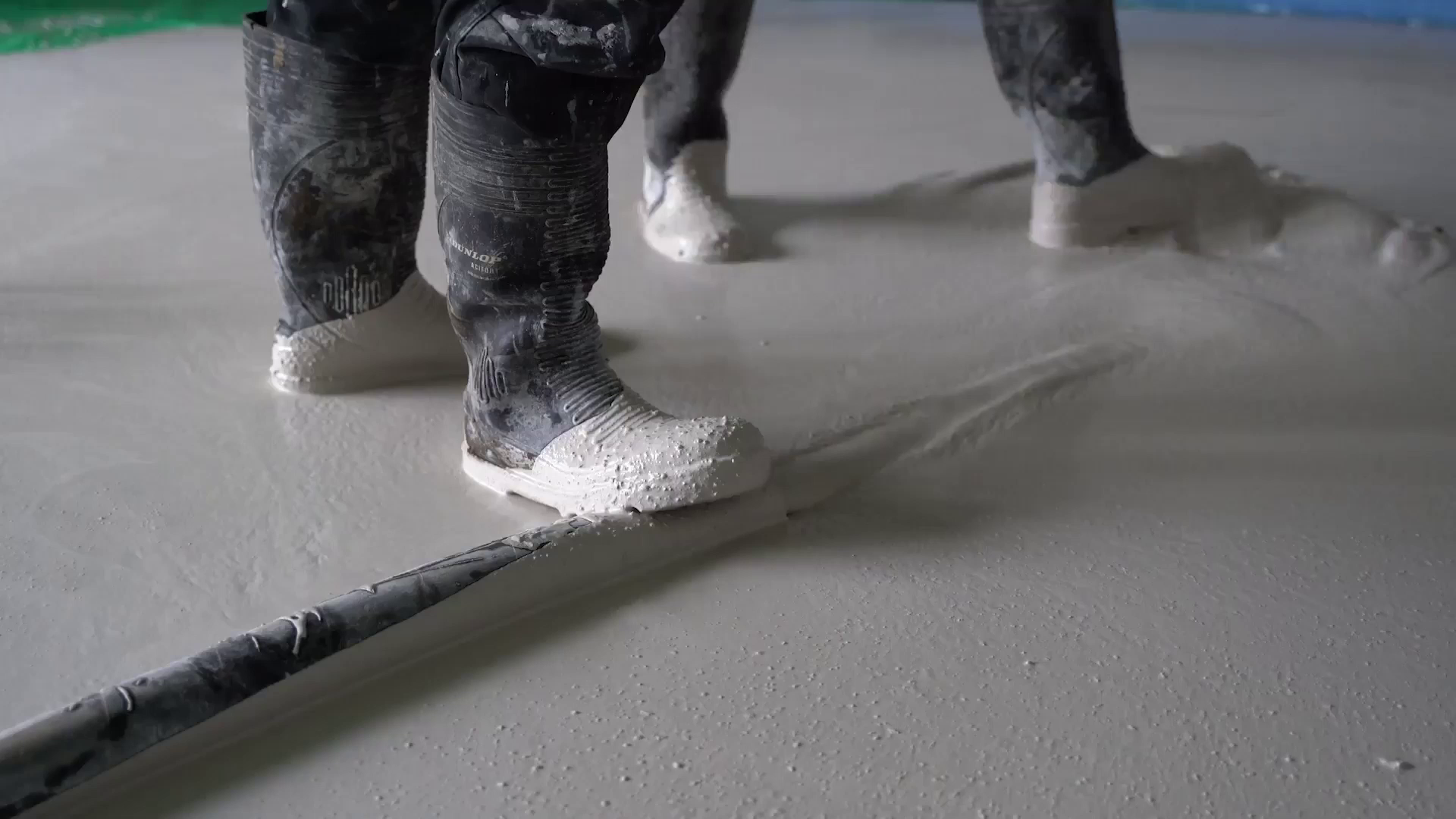
When choosing a screed for a commercial or residential development, it is important to consider more than just the installation method. Pumped liquid screed and traditional sand and cement screed offer different characteristics that can affect the strength, finish, and performance of the completed floor.
So, when comparing pumped screed vs traditional screed, what are the key differences?
Pumped Liquid Screed vs Traditional Screed
Traditional sand and cement screed has been used for decades and remains a suitable option for many flooring projects. However, liquid screed offers several advantages that can make it particularly well suited to larger developments and modern construction projects.
Strength And Durability
A correctly specified and installed liquid screed provides a strong, durable base for a wide range of floor finishes.
Its formulation allows the screed to flow around the floor area and form a consistent layer, helping to create a stable surface when installed to the manufacturer’s specification.
Traditional sand and cement screed can also provide a durable floor, but achieving a consistent finish relies heavily on correct mixing, placement, and manual compaction.
A Smoother, More Level Finish
One of the key advantages of liquid screed is its ability to flow across the floor and create a highly level surface.
This can provide an excellent base for floor coverings such as tiles, vinyl, carpet, and engineered flooring. The self-levelling properties of many liquid screeds also make it easier to achieve a consistent finish across larger areas.
Traditional screed is manually levelled and finished, meaning the quality of the final surface can be more dependent on the installation technique.
Drying And Installation Times
Project timescales are another important consideration when selecting a screed.
Certain liquid screed systems can offer faster drying times than traditional sand and cement screed, allowing subsequent flooring work to begin sooner when the manufacturer’s specified conditions have been met.
The actual drying and commissioning period will depend on the product, thickness, site conditions, and ventilation, so the manufacturer’s guidance should always be followed.
Thermal Conductivity And Underfloor Heating
Liquid screed is particularly effective when used with underfloor heating.
Because liquid screed can closely surround heating pipes, it helps create good contact between the pipes and the screed layer. Its thermal properties allow heat to transfer efficiently through the floor, helping underfloor heating systems respond effectively.
This makes liquid screed an increasingly popular choice for modern energy-efficient developments.
Which Screed Is Best For Your Project?
Traditional sand and cement screed still has its place, particularly for projects where its characteristics and installation method are appropriate.
However, for larger commercial developments, new-builds, and properties incorporating underfloor heating, liquid screed can offer important advantages in terms of surface finish, consistency, drying, durability, and thermal performance.
The right choice will ultimately depend on the floor specification, building requirements, installation conditions, and intended floor finish.
Pumped Screed For Your Project
If you are deciding between pumped screed and traditional screed, it is worth considering how the installation method will affect your overall project.
At Screedflo, we provide professional liquid screed supply and installation in Essex and surrounding areas. Our team can advise on the most suitable solution for your project, whether you are working on a commercial development, new-build, or residential property.
Get in touch with Screedflo on 01621 874781 to discuss your screed requirements and find the right solution for your project.