
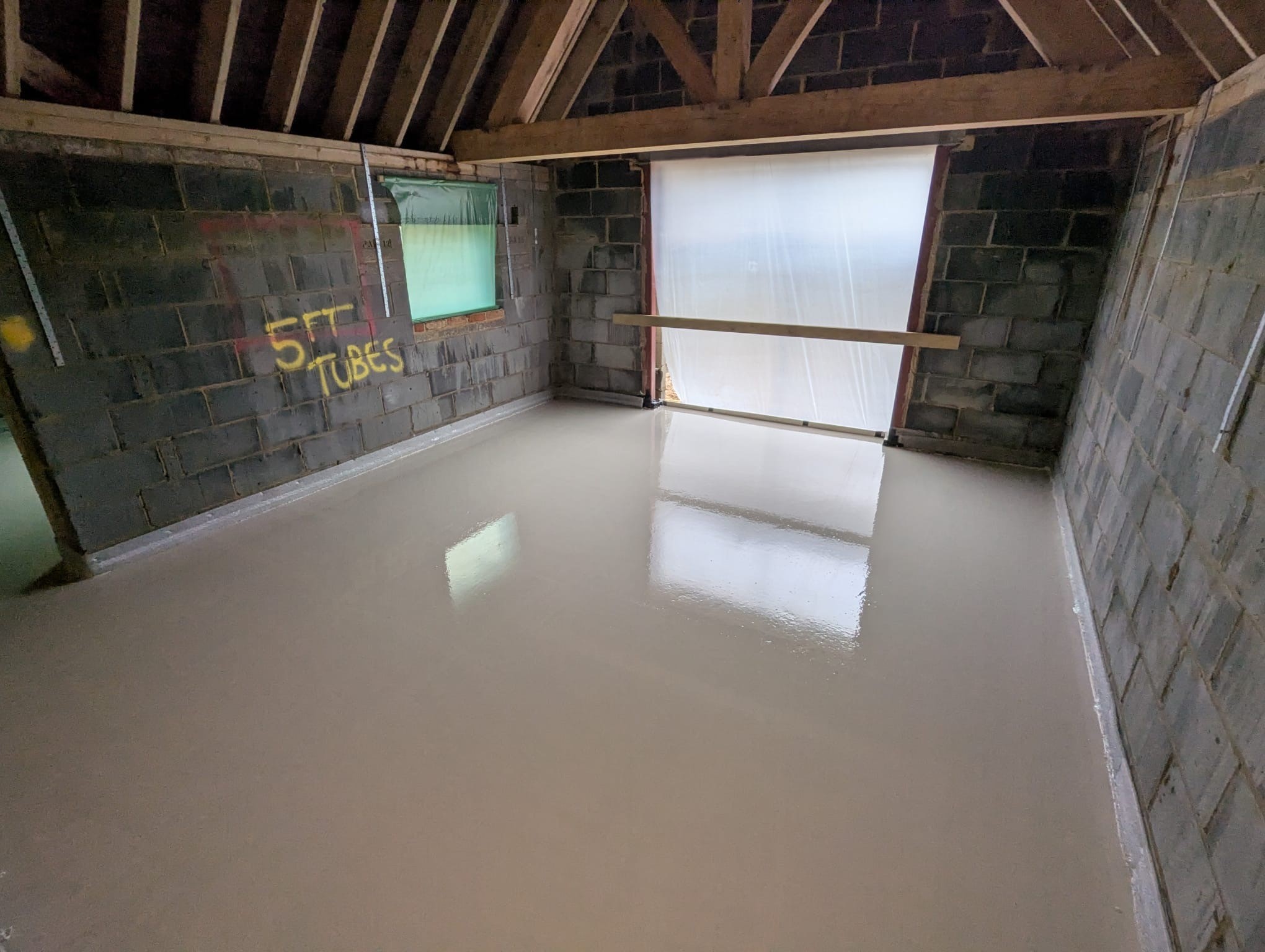
Concrete and screed are both commonly used in construction, but they serve very different purposes. While both materials are made from cement, water and aggregates, concrete is designed to provide structural strength, whereas screed is used as a smooth finishing layer to create a level surface ready for floor coverings.
Understanding the difference between concrete and screed is important when planning a flooring project, as choosing the correct material will ensure the best performance and finish.
What Is the Difference Between Concrete and Screed?
The main difference between concrete and screed comes down to their intended use and the type of aggregates they contain.
Concrete is a strong, structural material used for foundations, slabs and other load-bearing applications. It contains coarse aggregates such as gravel or crushed stone, typically between 5mm and 20mm in size. These larger aggregates provide concrete with the strength and durability required for structural use.
Screed, on the other hand, is a finishing layer designed to create a smooth and level surface for flooring. It uses finer aggregates, such as sand, usually between 0mm and 4mm in size. This creates a smoother surface that is suitable for installing floor coverings including carpet, tiles, wood and vinyl.
Strength and Load-Bearing Capacity
Concrete is significantly stronger than screed and is designed to support heavy loads. It is commonly used for foundations, walls, structural floors, columns and external surfaces where durability and load-bearing capacity are essential.
Screed is not designed to replace concrete or provide structural support. Its main purpose is to create a flat, smooth surface that improves the quality of the finished floor.
Traditional sand and cement screeds can provide a suitable flooring base, but they are generally not as smooth or level as liquid screeds. Liquid screed offers improved flow and accuracy, helping create a more consistent finish across the entire floor area.
Thickness and Installation
Concrete is usually poured in much thicker layers, often 100mm or more depending on the structural requirements of the project. While it provides excellent strength, the finished surface can often be uneven and requires a screed layer before final floor finishes are installed.
Traditional sand and cement screed is normally installed manually using a trowel and generally requires a thickness of around 65mm to 75mm when laid over concrete. It can be more labour intensive to install and achieve a perfectly level finish.
Screedflo liquid screed is installed using specialist pumping equipment, allowing the material to flow easily across the floor area and naturally achieve a highly level surface.
Depending on the application, Screedflo liquid screed can be installed at:
- 15mm minimum thickness on a concrete base using Screedflo TS15
- 40mm minimum thickness over insulation
- 50mm minimum thickness when installed with underfloor heating
Liquid anhydrite screed is also more flexible and efficient to install than traditional sand and cement screed. Its flowing properties allow it to surround underfloor heating pipes effectively, helping improve heat transfer and overall system performance.
Concrete or Screed: Which One Do You Need?
Concrete and screed are not alternatives to one another, as they perform different roles within a construction project.
Concrete provides the strength and stability needed for structural elements, while screed provides the smooth, level finish required before installing the final flooring surface.
For modern flooring projects, particularly those involving underfloor heating, liquid screed provides an efficient solution that delivers excellent levels of accuracy, strength and finish quality.
At Screedflo, we specialise in the supply and installation of high-quality liquid anhydrite screed for residential and commercial projects. Our experienced team can provide advice on the best screed solution for your requirements.