
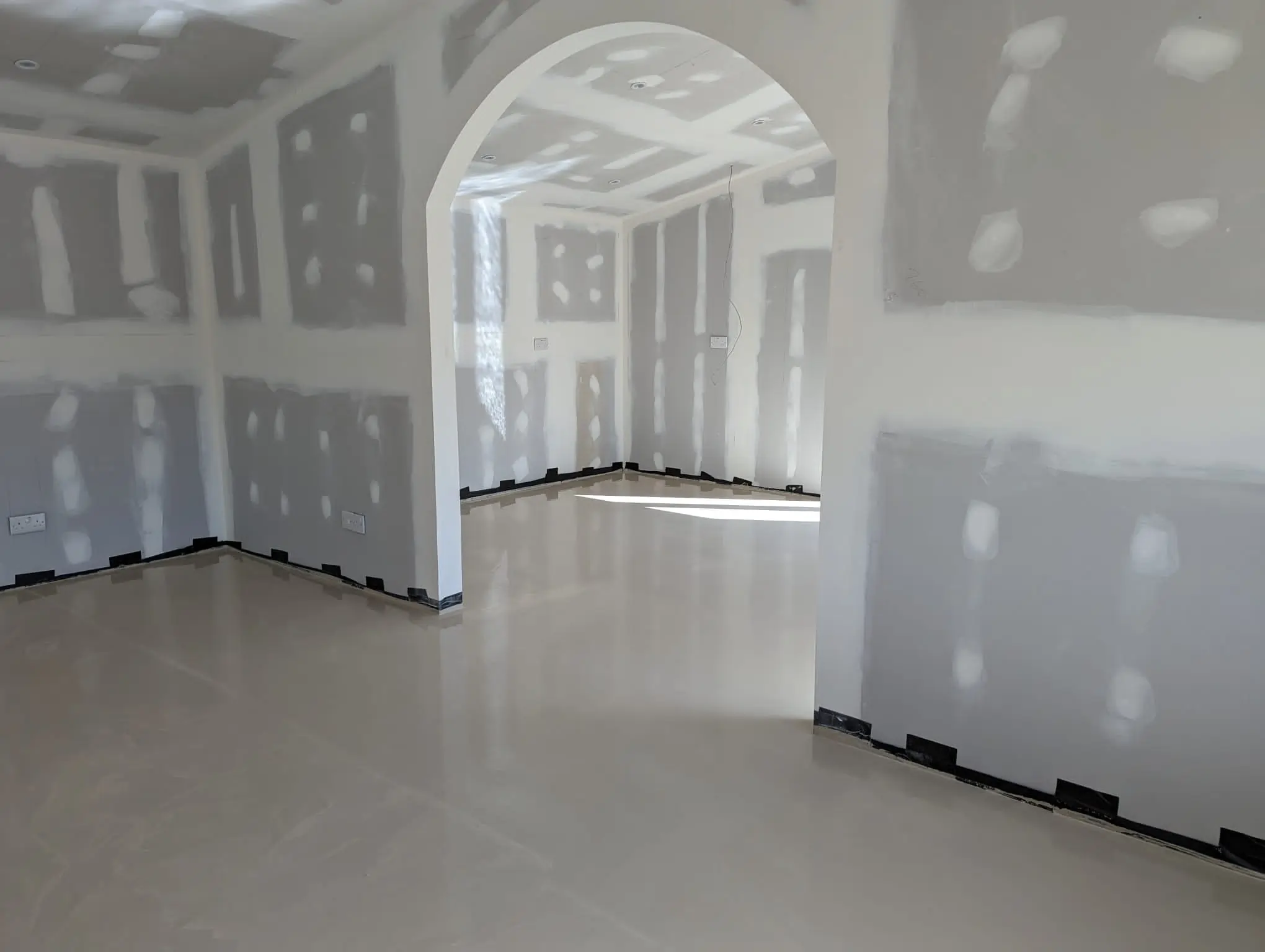
One of the most common questions we get asked at Screedflo is: “How long does liquid screed take to dry before I can lay my flooring?”
It’s an understandable concern. Whether you’re renovating your home, managing a new build project, or working to a strict deadline, knowing when you can move on to the next stage of the job is crucial.
The simple answer is that it depends on several factors, including the type of liquid screed used, the thickness of the installation, site conditions, and the flooring you’re planning to install. However, some general guidelines can help you plan your project effectively.
Here’s what you need to know.
Typical Liquid Screed Drying Times
As a general rule, anhydrite liquid screeds dry at approximately:
- Around one day per millimetre of screed thickness up to 40mm.
- Around two days per millimetre for every millimetre above 40mm.
For example, a 50mm screed could take approximately 60 days to dry sufficiently under ideal conditions.
A 60mm screed may require around 80 days.
These estimates assume favourable drying conditions, including adequate ventilation, moderate temperatures, and average humidity levels.
It’s worth remembering that these are guidelines rather than guarantees. Every project is different.
At Screedflo we batch our screed on site once we are set up and ready to lay the screed. So unlike ready mix deliveries, which often travel for over an hour, and need to add water to the screed once onsite, our screed uses the minimum water required.
The reduction in water means faster drying times, so generally a 40mm screed can be ready for floor coverings after 28 days.
Our fast-drying Rapide screed can be dry enough for floor coverings after 14 days when laid up to 50mm depth.
Factors That Affect Liquid Screed Drying Times
Several factors influence how quickly liquid screed dries.
Screed Thickness
The thicker the screed, the longer it takes for moisture to escape.
Many of the underfloor heating thermal screeds we install at Screedflo are laid at depths between 45mm and 55mm. These depths provide excellent strength and maximise heat transfer from the underfloor heating system. Screeds deeper than 55mm will require longer drying periods than the thinner screeds.
Site Conditions
Drying relies heavily on environmental conditions.
Poor ventilation, cold temperatures, and high humidity can significantly extend drying times. Newly built properties often contain large amounts of residual construction moisture, eg, from painting or plastering, which can further slow the process.
Good airflow is essential. Opening windows where appropriate and ensuring adequate ventilation can help encourage consistent drying. The use of dehumidifiers will improve drying times.
Type of Floor Covering
Different flooring materials have different moisture tolerances.
Ceramic tiles can often accommodate slightly higher moisture levels than timber flooring, luxury vinyl tiles, or certain adhesives.
Wood flooring, in particular, requires careful moisture testing before installation, as excess moisture can cause expansion, distortion, and long-term damage.
Always check the flooring manufacturer’s requirements before proceeding.
Can Underfloor Heating Speed Up Drying?
Yes, it can. Underfloor heating systems must go through a ‘commissioning cycle’, which is a minimum 18 days. This also drives out residual moisture and can substantially reduce drying times.
After 7 days of natural drying, the commissioning process can commence:
- Day 1 – start commissioning at 20ºC Flow temperature.
- Day 2 -8 Raise by 5ºC increments per day up to the optimum operating temperature
of the system. Note: Water temperature should not exceed 50ºC. - Day 9 – hold at max 50ºC for 3 days. (To force dry the screed, hold for 7 days)
- Day 12 -18 – reverse the process back to ambient temperature.
Ensure that the UFH system is switched off for a minimum of 48 hours prior to testing the moisture content using a recognised method. Failure to follow this procedure prior to the application of floor coverings is likely to lead to the failure of the floor finish.
It’s important not to switch the heating on too early or increase temperatures too quickly, as this may compromise the screed’s performance.
How Do You Know When Liquid Screed Is Dry Enough?
The only reliable way is through moisture testing.
Liquid screed may appear dry on the surface while still retaining significant moisture deeper within the slab. Installing flooring too soon can trap this moisture, leading to adhesive failure, lifting, warping, mould growth, or damage to expensive floor finishes.
At Screedflo, we always advise against relying solely on estimated drying periods. While time-based calculations provide a useful guide, moisture testing provides certainty.
Most floor coverings require the screed to reach a specific relative humidity level before installation, often around 75% RH or lower, depending on the flooring specification.
Generally, we state that an anhydrite screed should be dry to 0.5% or 75RH. And it must be tested using a digital hygrometer (or carbide bomb test), not with a pronged moisture metre, which only tests the top of the screed.
Professional moisture testing removes the guesswork and helps prevent expensive mistakes.
Proceeding without testing may save a few days initially, but the risk of flooring failure simply isn’t worth it.
Expert Advice from Screedflo
If you’re planning a project involving liquid screed, our advice is straightforward: don’t rely on assumptions.
Allow realistic drying times, maintain suitable site conditions, follow the correct underfloor heating commissioning process, and always verify moisture levels before installing floor coverings.
Every project is unique, and factors such as screed depth, weather conditions, ventilation, and floor finish selection all influence the timeline.
At Screedflo, we specialise in the installation of anhydrite liquid screed, working closely with homeowners, builders, developers, and flooring contractors to ensure every floor is ready for its final finish at the right time. From expert advice before installation through to guidance on drying and floor preparation, our aim is to help you achieve a durable, high-quality finish without unnecessary delays or costly setbacks.
If you’re unsure whether your liquid screed is ready for flooring, seeking professional advice before proceeding can save considerable time, money, and stress further down the line.